People
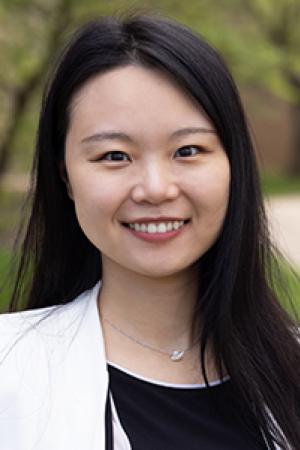
Xiaoran Sun
-
Pronouns: she/her/hers
-
Assistant Professor, McKnight Land-Grant Professorship
Dr. Sun's research uses innovative methods to understand how teens and parents use digital technologies, including social media and AI companions, and how their digital behaviors impact their relationships and mental health.
PhD, Human Development and Family Studies, the Pennsylvania State University
MS, Human Development and Family Studies, the Pennsylvania State University
BS, Psychology, Zhejiang University, Hangzhou, China
Technology and families
Adolescent mental health & well-being
Young adulthood
Educational achievement
Quantitative methods
Data science
I conduct research on how adolescents and parents use their smartphones and social media, and how their digital behaviors impact their well-being and family relationships. I use passive sensing tools to collect time intensive data from parents' and adolescents' smartphones to objectively capture what they see and do on the screen. My research also extends to the application of computational methods, such as machine learning, for advancing discoveries in developmental and family research.
Currently, I study how adolescents and parents use smartphones, and how their digital behaviors influence their well-being and relationships. For this research, I use high-intensity, passive sensing data collected from participants' smartphones (every 5 seconds over up to 6 months) to objectively observe and examine their digital behaviors across multiple time-scales. This project is titled the Family Screenome Project, which is being conducted in collaboration with the Stanford Human Screenome Project. This work is supported by the University of Minnesota's Grant-in-Aid of Research, Artistry, and Scholarship. Here's more about this grant in this story.
Further, I am also leading the research on applying machine learning to the analysis of large-scale, national longitudinal datasets to build predictive models based on adolescent experiences in predicting their developmental outcomes, including educational and career achievements and well-being. See a research article published on this topic. This work is supported by the Spencer Foundation. Read more about this work in this story.
I strongly believe in team science and interdisciplinary collaborations. Beyond my appointment at Family Social Science, I am also a core faculty member at the Learning Informatics Lab in the College of Education and Human Development, and a faculty affiliate at the Data Science Initiative in the College of Science and Engineering and at the Minnesota Population Center.
Teaching and mentoring undergraduate and graduate students are extremely important to me. I hope every student can walk out of my classroom by using the knowledge learned to be a better or happier partner, parent, caregiver, sibling, and/or friend. I see building agency and self-efficacy in students an important part of my teaching, especially for research methods classes. I believe it is important to create a supportive and inclusive classroom environment for students from diverse backgrounds to learn knowledge and skills.
Selected publications
- Sun, X. (2024). Supervised machine learning for exploratory analysis in family. Journal of Marriage and Family: Mid-Decade Special Issue on Theory and Methods. (online first). Read the full article.
- McHale, S.M., Sun, X., Updegraff, K.A., & Whiteman, S.D. (2024). Patterns and correlates of changes in sibling intimacy and conflict from middle childhood through young adulthood. Developmental Psychology. (online first). (*co-first authors). Read the full article.
- Dworkin, J., Sun, X., LeBouef, S., & Keyzers, A. (2023). Associations among parent technology use, locus of control, and child problem behaviors. Family Relations, 72(2), 443-457.
- Sun, X., Haydel, K. F., Matheson, D., Desai, M., & Robinson, T. N. (2023). Are mobile phone ownership and age of acquisition associated with child adjustment? A 5-year prospective study among low-income Latinx children. Child development, 94(1), 303-314. (Media mentions: Stanford Medicine News, CTV News, Inc. Magazine, Futurity, CNN Indonesia, The Good Men Project, Gigazine [in Japanese], Before It’s News, reason)
- Sun, X., Ram, N., Reeves, B., Cho, M.-J., Fitzgerald, A., & Robinson, T. N. (2023). Connectedness and independence of young adults and parents in the digital world: Observing smartphone interactions at multiple timescales using Screenomics. Journal of Social and Personal Relationships, 40(4), 1126–1150. Read the full article.
For the full list of Dr. Xiaoran's publications, please see her Google Scholar page.
Selected Talks:
- Sun, X. (2024, May). Using Screenomics to Study Adolescents’ and Parents’ Smartphone Use and Well-being. Invited talk for the Health Psychology Interest Group (H-PIG), Department of Psychology, University of Minnesota, Minneapolis.
- Sun, X. (2024, May). Introduction to Machine Learning for Developmental Psychology and Family Research. Invited talk for the Department of Psychology and Behavioral Sciences, Zhejiang University, virtual.
- Sun, X. (2023, June). Smartphone Behaviors and Youth Mental Health: Two Longitudinal Studies. Invited talk for the 3rd Wenqin Child Development Forum, Zhejiang University, Hangzhou, China.
- Sun, X. (2023, April). Machine Learning for Human Development and Family Research. Talk for the Minnesota Population Center.
- Sun, X. (2022, November). Machine Learning for Human Development and Family Research: An Overview and an Example. Talk for the Machine Learning Seminar Series, Data Science Initiative, College of Science and Engineering, University of Minnesota.
- Sun, X. (2022, February). Introduction to Machine Learning for Human Development and Family Research. Talk delivered at NICHD SBSBeat (Social and Behavioral Sciences Branch Education and Training) Seminar.
- Love, B. & Sun, X. (2021, July). Big Data & Data Mining Approaches for Psychology Research. Invited talk for the UCL (University College London)-PKU (Peking University) Summer School in Experimental Design in Psychology.
- Sun, X. (2020, November). Introduction to Machine Learning for Family Research: Basic Concepts, Common Algorithms, and Application Examples. Workshop delivered at the National Council on Family Relations, virtual conference. (137 registered attendees).
-
I am accepting new graduate advisees for fall 2027 in the PhD and MA/PhD programs.
I am accepting undergraduate research advisees for the Fall 2026 and Spring 2027 semesters. Please fill out this application form to get started.
- sunx0521@umn.edu
Honors and Awards
2026 - 2028 McKnight Land-Grant Professorship
2022 – 2024 Grant-in-Aid of Research, Artistry and Scholarship, University of Minnsota
2021 – 2022 Microsoft Azure Computing Award, Stanford Data Science
2020 – 2021 Scholarship, Stanford Data Science Scholars Program
2017 – 2018 Traineeship, Integrative Graduate Education and Research Training – Big Data Social Science (BDSS-IGERT) Training Program, National Science Foundation (Grant DGE-1144860)
2015 – 2016 University Graduate Fellowship, The Pennsylvania State University
2014 Li & Fung Scholarship, University of Hong Kong
2013 Outstanding Undergraduate Scholarship (First-class), Zhejiang University
2012 National Academic Scholarship, Ministry of Education of P. R. China
Recent News
"Certain social media apps linked to teen body image issues," MSN.com
"Busting five myths about mental health with University of Minnesota experts," UMN News
"How social media impacts teen body image," National Cyber Security
"FSoS assistant professor honored with McKnight Land-Grant Professorship," Family Social Science News
"Not all screen time is created equal, so what are the best and worst types?" CBS News
"Certain social media apps linked to teen body image," MSN
"FSOS assistant professor awarded $2.7+ million National Institutes of Health grant," Family Social Science News
"UMN professor employs big data and machine learning to develop new knowledge about tech, youth, and families," Family Social Science News
"FSOS faculty member awarded University research grant," Family Social Science News
"New Stanford Research: Stop stressing about when to get your kid a phone because it doesn't matter," Inc. magazine
"There's no 'golden rule' for when kids should get their first phone," Futurity
"There's no 'Golden Rule' for when kids should get their first phone," The Good Men Project
"Makin Dini Dapat Hp Bocah Makin Stres Dan Susah Tidur?" CNN Indonesia
"Age That Kids Acquire Mobile Phones Not Linked To Well-Being, Says Stanford Medicine Study," India Education Diary
"It is clear that there is no relationship between when a child had a mobile phone and sleep or depression," Gigazine (Japan)
"5 new studies that challenge conventional wisdom about kids and tech," Before It's News
"Age that kids acquire mobile phone not linked to well-being says Stanford study," Stanford Medicine
"No evidence early childhood phone ownership hurts kids: Stanford study," CTV News (Canada)
5 new studies that challenge conventional wisdom about kids and tech, reason